Tools · Design
Home Theater Seating Calculator
Set your room and the kind of chairs you have in mind, and see a real layout build — seats per row, number of rows, riser height, viewing distance, and the screen size to match. Free, instant, no sign-up.
Pricing the whole room? Open the cost estimator →
A planning guide, not a construction drawing — real layouts depend on door swings, walkways, HVAC, and code. AVX is an independent consultant — we design the room geometry (sightlines, risers, screen, and speaker placement), write the spec, and competitively bid the seating with the rest of the system. We don't sell the chairs, so the recommendation is yours, not a vendor's.
How to plan a seating layout
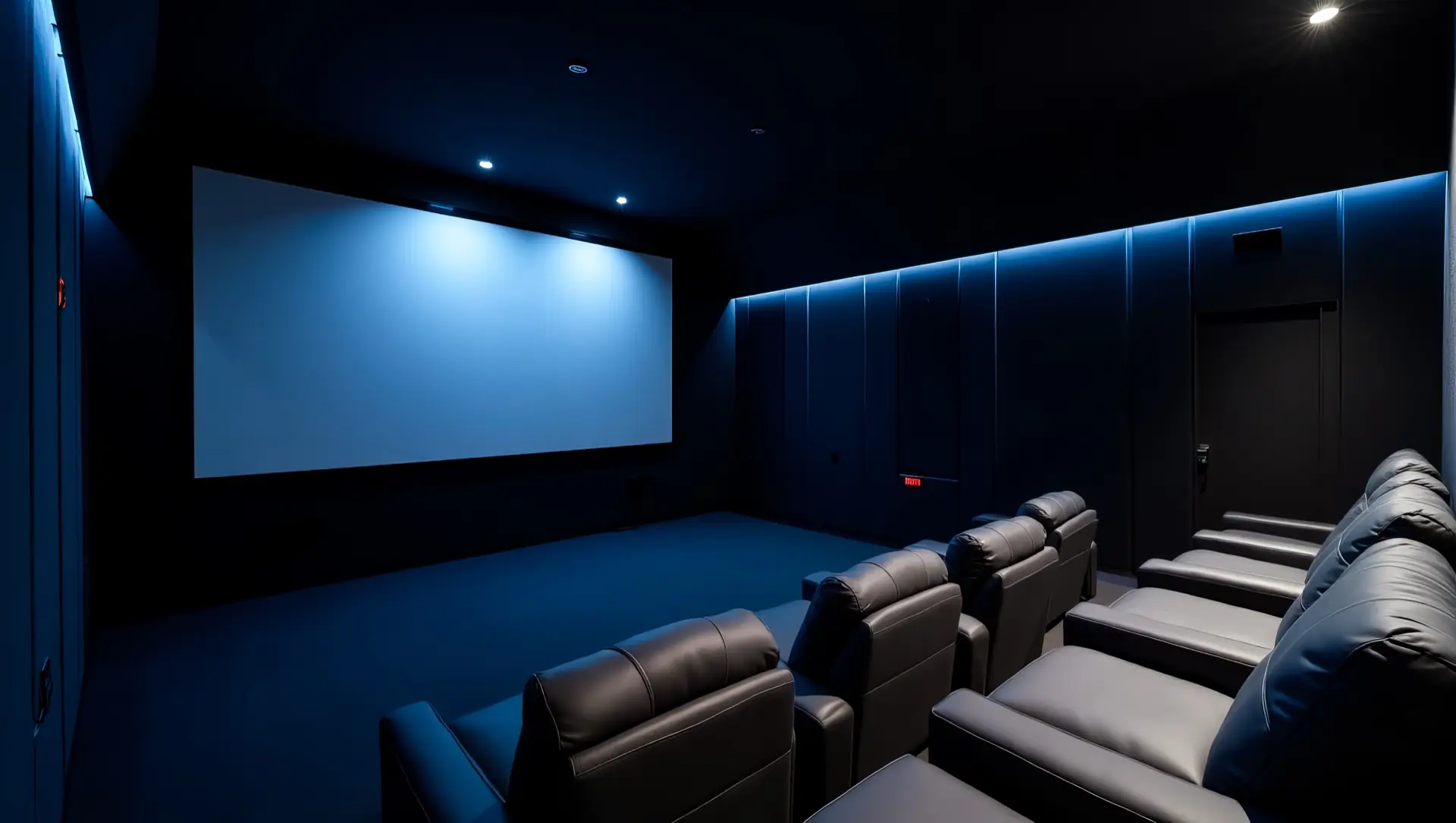
A great theater layout starts with three numbers: how wide each chair is, how much depth each row needs to recline, and how far the front row sits from the screen. From there it's geometry — fit the rows into the room, raise each one on a riser so every seat sees the screen, and size the picture so even the back row is immersive.
Leave about a foot on each side wall for surround speakers, keep the back row off the rear wall so the surrounds can breathe, and step each additional row up 8–12 inches. When the layout looks right, we lock it to your exact sightlines and design the room around it — then run a competitive bid so you pay a fair price for the gear.
How many seats fit in a home theater?
It comes down to four things: the width and length of the room, how wide each chair is, how much space each row needs to recline, and whether you want an aisle. As a rule of thumb, a recliner needs about 28–33 inches of width and a powered reclining row needs roughly 5–5.5 feet of depth. The calculator above lays out how many seats and rows fit your exact room, plus the riser height and viewing distance.
How much space does a reclining theater seat need?
Plan on about 28 inches of width for a standard recliner (33 inches for a wide model), and 5 to 5.5 feet of front-to-back depth per row once you account for full recline and a rear console. Fixed (non-reclining) seats only need about 36 inches of row depth. Leave roughly a foot of clearance on each side wall for surround speakers.
Do I need a riser for a second row of seats?
Almost always, yes. Once you have more than one row, the back row needs to be raised — typically 8 to 12 inches per step — so heads in the front row don't block the screen. The exact height depends on the screen position and how far back the rows sit; the calculator gives you a starting point, and a proper design finalizes it to your sightlines.
Who supplies the theater seating?
As an independent consultant, AVX doesn't sell the chairs — we design the room around them. We set sightlines, riser heights, screen size and position, and speaker geometry, write the spec, and competitively bid the seating along with the rest of the system so you get the right chairs at the right price. This tool is here to help you plan the layout before you buy.
 Designs
 Free independent planning tools · No equipment sold, ever · avxdesigns.com
Begin
Tell us the room — we'll design the perfect seat in the house.
A calculator gets you in the ballpark. As an independent consultant, we design the whole room — seating, screen, acoustics, and sightlines — then competitively bid and oversee the install. Tell us about your project.