Tools · Video
Projector Throw Distance Calculator
Set your screen size and where the projector can mount, and we'll work out the throw ratio, which class of projector fits, and how bright it needs to be — drawn to scale so the geometry is obvious.
Diagram drawn to scale · drag the sliders to update
Where each projector type would sit
For a 120" 16:9 screen (8.7 ft wide):
| Projector type | Throw ratio | Distance for this screen |
|---|---|---|
| Ultra-short throw (UST) | 0.25 – 0.4 | — |
| Short throw | 0.4 – 1.0 | — |
| Standard throw | 1.0 – 2.0 | — |
| Long throw | 2.0 – 3.0 | — |
Most dedicated home-theater projectors are standard throw with a zoom lens, giving flexibility within that range. Ultra-short throw units sit on a credenza right below the screen — ideal when a long ceiling run isn't possible.
What is a projector throw ratio?
Throw ratio is the distance from the projector lens to the screen divided by the image width. A 1.5 throw ratio means the projector sits 1.5 times the screen's width away. It tells you how far back a projector needs to be — or, working backward, which projector fits the distance you have.
How far should my projector be from the screen?
Multiply your screen width (not diagonal) by the projector's throw ratio. For a 120" 16:9 screen (about 8.7 ft wide) and a typical 1.5 throw-ratio projector, that's roughly 13 feet. Short-throw projectors sit much closer; long-throw lenses sit farther back.
How many lumens do I need for a projector?
It depends on screen size and room light. A fully darkened theater needs roughly 16 foot-lamberts of brightness; rooms with ambient light want 30–50. For a 120" screen that's about 700 lumens in the dark and up to ~2,100 with light. Bigger screens and brighter rooms need more.
 Designs
 Free independent planning tools · No equipment sold, ever · avxdesigns.com
Begin
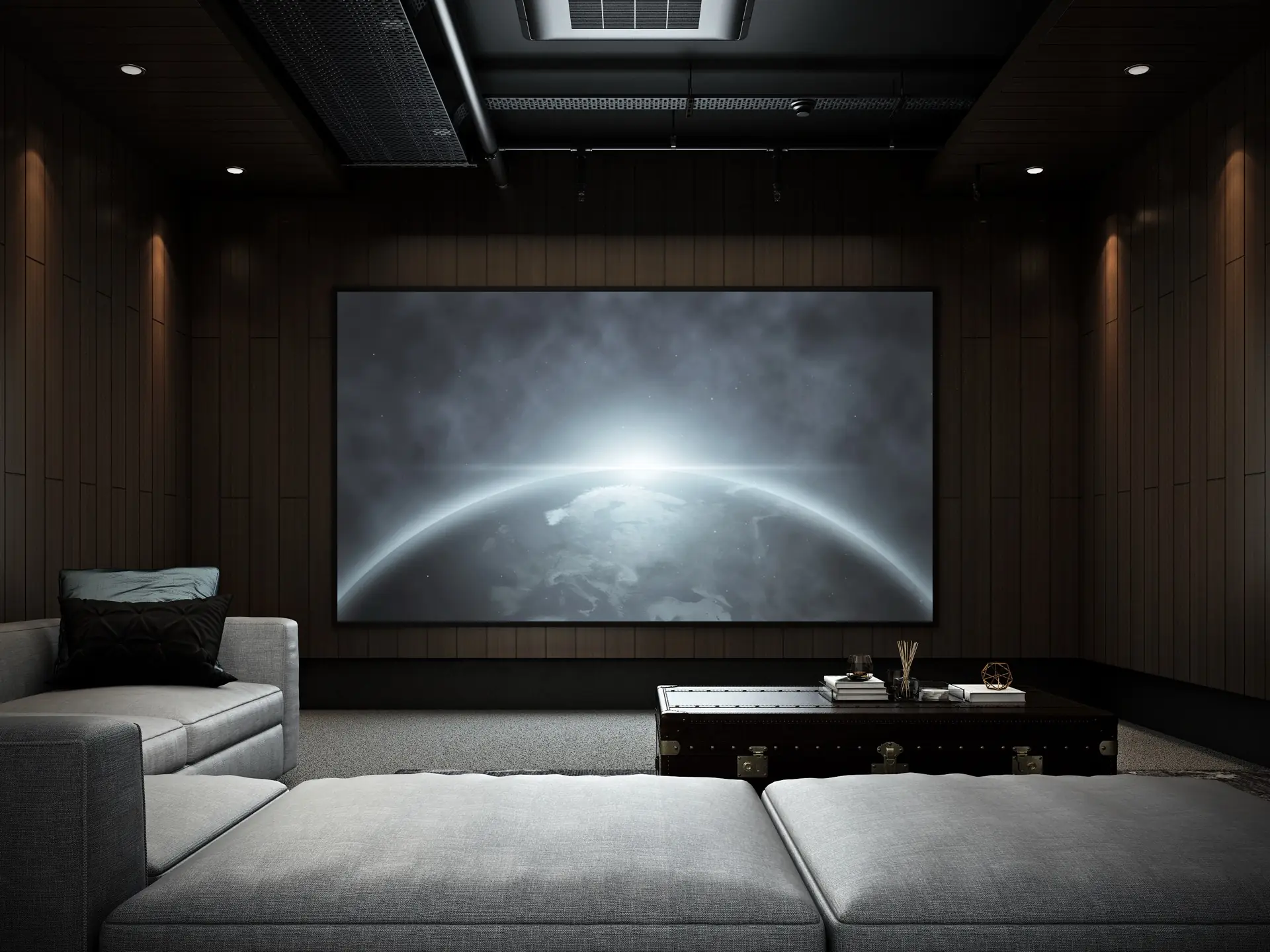
Designing a real theater?
A calculator gets you in the ballpark. We design the whole room — screen, geometry, acoustics, and projector spec — independently, then competitively bid the build so you get the right gear at the right price. We don't sell equipment; we design it.